
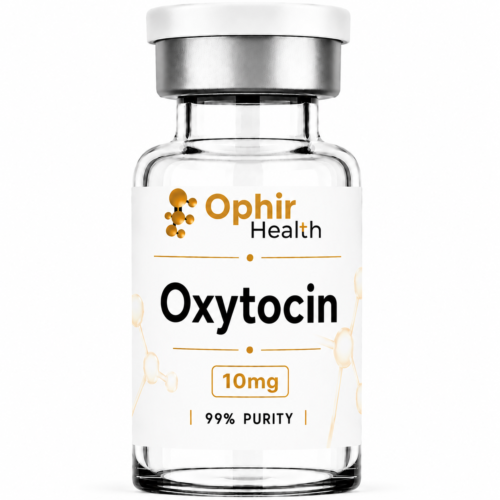
• Oxytocin is a naturally occurring peptide hormone produced in the brain and involved in communication between the brain and other parts of the body. Synthetic oxytocin has been widely studied for its interaction with oxytocin receptors, which are involved in a variety of neurological, behavioral, and reproductive processes.

    Research has explored its relationship with social behavior, emotional processing, stress responses, bonding, and neurological signaling. Scientists have also examined oxytocin receptor activity in reproductive biology and the complex pathways connecting hormonal signaling with brain function and behavior.

    Ophir Health Oxytocin 10mg provides a precisely measured format for laboratory research involving oxytocin receptor activity, neuroendocrine signaling, behavioral pathways, and reproductive biology.
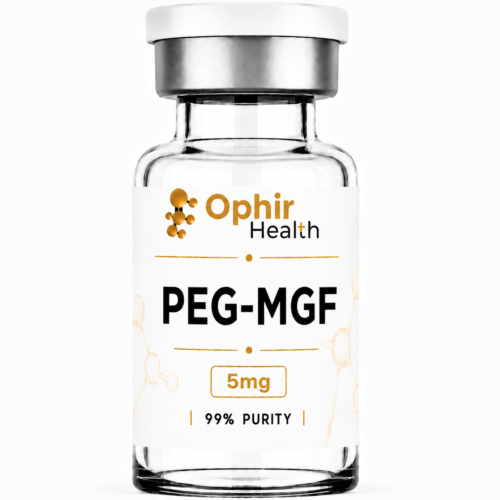
  • PEG-MGF is a modified form of Mechano Growth Factor (MGF), a peptide associated with the IGF-1 family and studied for its role in the way muscle tissue responds to mechanical stress. The addition of polyethylene glycol, known as PEGylation, is designed to increase the peptide’s stability and extend its presence in experimental settings.

    Research has explored MGF-related pathways in connection with muscle-cell activity, tissue remodeling, cellular growth, and responses to mechanical stress. Scientists have also examined its relationship with muscle progenitor and satellite cells, which are involved in the biological processes surrounding skeletal-muscle maintenance and repair. (⁠PubMed)

    Ophir Health PEG-MGF provides a precisely measured format for laboratory research involving IGF-1-related pathways, muscle-cell signaling, tissue response, and skeletal-muscle biology.

  • LL-37

    Price range: $73.00 through $124.00

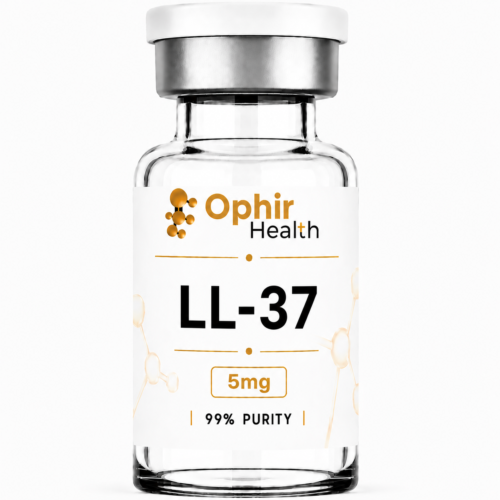
    LL-37 is a naturally occurring antimicrobial peptide and the only known human member of the cathelicidin family. It forms part of the body’s innate immune system and is found in several tissues and immune cells, where researchers have studied its role in the body’s early biological responses to microorganisms.

    Research has explored LL-37 in connection with innate immune signaling, antimicrobial activity, inflammatory pathways, and cellular responses. Scientists have also investigated its relationship with immune-cell communication, skin biology, blood-vessel formation, and biological processes involved in tissue and wound response. (⁠PubMed)

    Ophir Health LL-37 provides a precisely measured format for laboratory research involving innate immunity, antimicrobial peptide activity, immune signaling, and cellular-response pathways.

    Select options This product has multiple variants. The options may be chosen on the product page Details
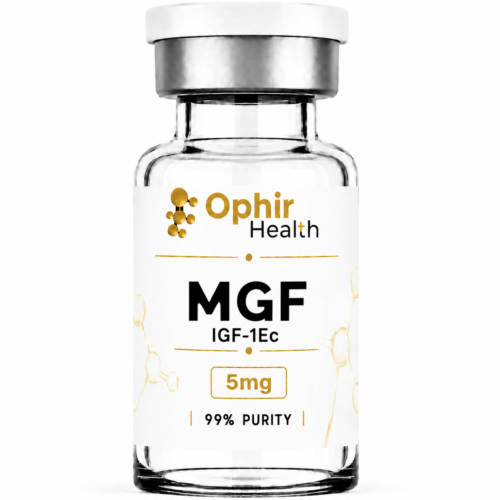
  • MGF, or Mechano Growth Factor, is associated with a specialized form of insulin-like growth factor-1 (IGF-1) produced in response to mechanical stress in tissues such as skeletal muscle. It has become an area of scientific interest for understanding how muscle cells respond and adapt to physical stress and tissue damage.

    Research has explored MGF-related pathways in connection with muscle-cell activity, satellite cells, cellular growth, tissue remodeling, and skeletal-muscle response. Scientists have also investigated its relationship with muscle progenitor cells and the biological processes involved in maintaining and repairing muscle tissue. (⁠PubMed)

    Ophir Health MGF provides a precisely measured format for laboratory research involving IGF-1-related signaling, muscle-cell biology, tissue response, and skeletal-muscle research.

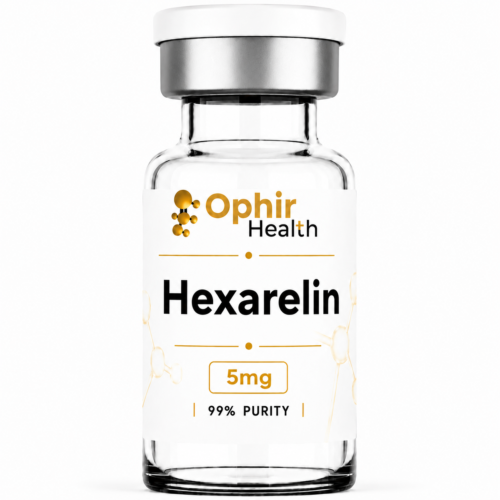
  • Hexarelin is a synthetic research peptide belonging to the growth hormone-releasing peptide (GHRP) family. It interacts with the growth hormone secretagogue receptor (GHS-R), the same receptor associated with ghrelin, a naturally occurring hormone involved in growth hormone and metabolic signaling.

    Research has explored its relationship with growth hormone release, pituitary signaling, metabolic activity, and cardiovascular pathways. Scientists have also investigated how it interacts with receptors found outside the pituitary, including those present in cardiac and vascular tissues.

    Ophir Health Hexarelin provides a precisely measured format for laboratory research involving GHS-R activity, growth hormone signaling, endocrine pathways, and metabolic research.

  • Gonadorelin

    Price range: $56.00 through $80.00

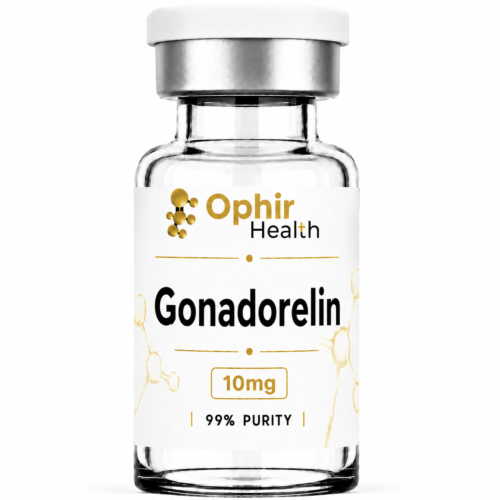
    Gonadorelin is a synthetic form of gonadotropin-releasing hormone (GnRH), a naturally occurring hormone produced by the hypothalamus. GnRH acts as an important messenger between the brain and pituitary gland, helping researchers understand how the body regulates reproductive hormones.

    Research has examined its relationship with luteinizing hormone (LH), follicle-stimulating hormone (FSH), pituitary activity, and reproductive signaling. These pathways play important roles in ovarian and testicular function and the broader regulation of the reproductive endocrine system.

    Ophir Health Gonadorelin provides a precisely measured format for laboratory research involving GnRH signaling, pituitary function, reproductive biology, and endocrine pathways.

    Select options This product has multiple variants. The options may be chosen on the product page Details
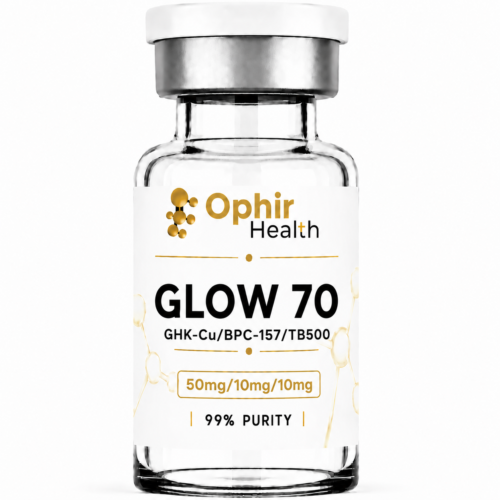
  • GLOW 70 is a research peptide blend combining GHK-Cu (50mg), BPC-157 (10mg), and TB-500 (10mg). Each peptide has been studied for different biological processes involving cellular signaling, connective tissue, and the way tissues respond to stress and damage.

    Research involving these peptides has explored collagen and fibroblast activity, tissue remodeling, cellular repair pathways, angiogenesis, and inflammatory signaling. GHK-Cu is widely studied in skin and connective-tissue biology, while BPC-157 and TB-500 have been investigated in experimental models involving tissue response, cell migration, blood-vessel formation, and regenerative processes.

    Ophir Health GLOW 70 provides a combined 70mg research format for laboratory studies involving skin and connective-tissue biology, collagen pathways, cellular signaling, tissue remodeling, and regenerative research.

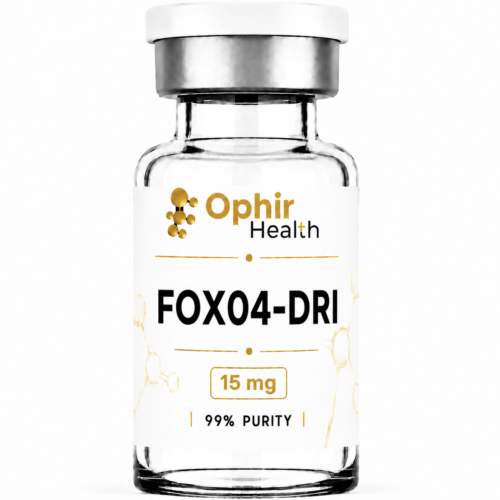
  • FOXO4-DRI is an experimental research peptide studied in the field of cellular senescence, the process in which aging or damaged cells stop dividing but remain biologically active. It was designed to interfere with the interaction between two proteins known as FOXO4 and p53.

    Laboratory and animal research has examined whether disrupting this interaction can influence the survival of senescent cells while helping scientists better understand their role in aging and tissue function. This has made FOXO4-DRI an area of interest in cellular aging, senescence, and longevity-related research.

    Ophir Health FOXO4-DRI provides a precisely measured format for laboratory research involving FOXO4-p53 signaling, cellular senescence, aging biology, and senescent-cell research.

  • Follistatin 344 is a research protein associated with the regulation of activin and myostatin, signaling proteins involved in several biological processes. Scientists have studied follistatin because of its ability to bind to these proteins and influence pathways associated with cellular growth and muscle biology.

    Research has explored its relationship with myostatin signaling, skeletal-muscle development, tissue growth, and cellular regulation. Scientists also study follistatin-related pathways to better understand how growth factors help regulate muscle cells and other tissues.

    Ophir Health Follistatin 344 provides a precisely measured format for laboratory research involving myostatin and activin pathways, muscle biology, cellular growth, and tissue signaling.

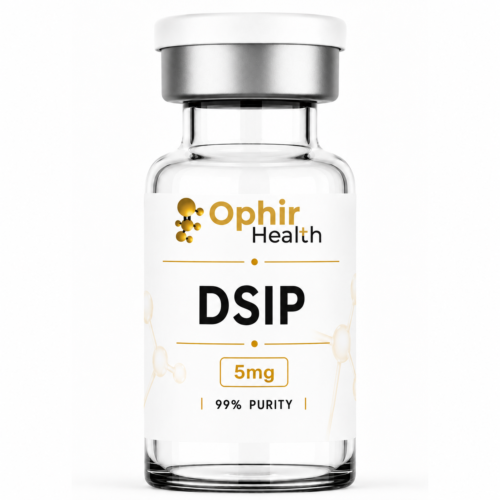
  • DSIP, or Delta Sleep-Inducing Peptide, is a small peptide first identified during research into sleep and neurological activity. It has since been studied as scientists work to better understand the complex signaling systems involved in sleep, stress, and nervous-system function.

    Research has explored DSIP in connection with sleep-related processes, neurological signaling, stress-response pathways, and neuroendocrine activity. Its biological mechanisms remain an active area of investigation, making it particularly relevant to experimental sleep and neuroscience research.

    Ophir Health DSIP provides a precisely measured format for laboratory research involving sleep-related pathways, neurological signaling, stress-response biology, and neuroendocrine research.

  • Curcumin is a naturally occurring compound found in turmeric and has been widely studied for its interactions with numerous cellular and molecular pathways. Unlike many products in the Ophir Health research catalog, curcumin is a polyphenol rather than a peptide.

    Research has explored curcumin in connection with inflammatory signaling, oxidative stress, antioxidant activity, cellular metabolism, and cell-signaling pathways. Scientists continue to investigate how it interacts with molecular targets involved in cellular responses and biological stress.

    Ophir Health Curcumin provides a precisely measured format for laboratory research involving inflammatory pathways, oxidative stress, antioxidant activity, and cellular biology.

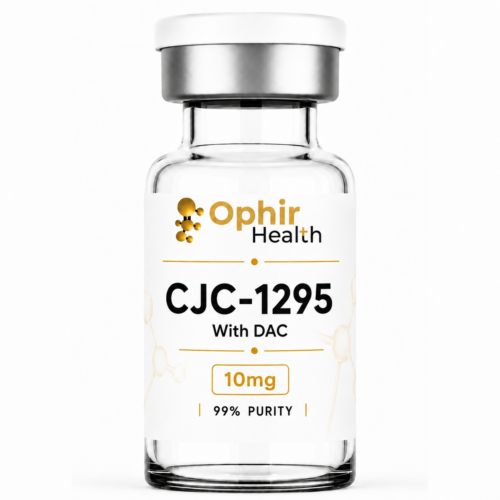
  • CJC-1295 with DAC is a synthetic research peptide modeled after growth hormone-releasing hormone (GHRH), the natural hormone responsible for signaling the pituitary gland to release growth hormone. The Drug Affinity Complex (DAC) modification was designed to extend the peptide’s activity in experimental settings.

    Research has explored CJC-1295 with DAC in connection with growth hormone signaling, IGF-1 activity, pituitary function, and endocrine regulation. Scientists study these pathways to better understand the relationship between GHRH signaling, growth factors, metabolism, and other physiological processes.

    Ophir Health CJC-1295 with DAC provides a precisely measured format for laboratory research involving GHRH pathways, growth hormone signaling, IGF-1 activity, and endocrine research.

Go to Top