
-
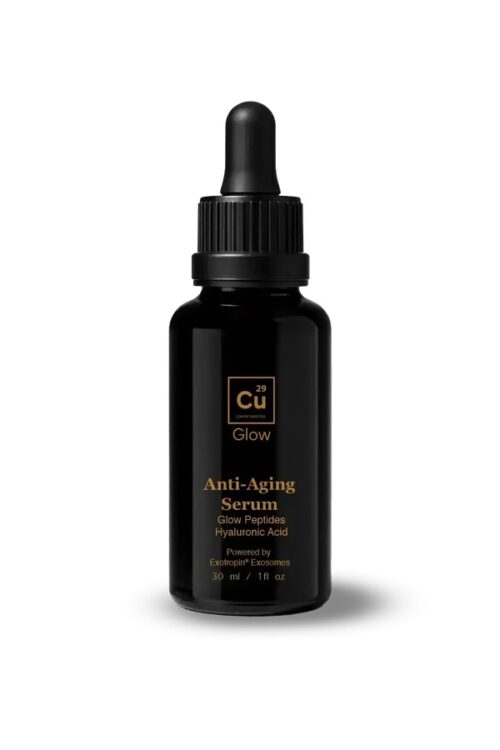
- Topical peptide research formulation for investigational dermatological research applications. Supplied for licensed research use only.Cu GLOW Peptide Research Serum (30mL)
A topical peptide research formulation combining Copper Tripeptide-1 (GHK-Cu), tri-phase hyaluronic acid, and exosome technology in a lightweight serum format for investigational dermatological research applications.
Tri-Phase Hyaluronic Acid Complex
A multi-weight hyaluronic acid system formulated to support moisture retention across multiple layers of the stratum corneum, contributing to surface hydration and skin feel.
eXo™ Exosome Technology
This formulation incorporates Exotropin exosomes, a delivery system studied in dermatological research literature for its role in topical formulation science.
Copper Tripeptide-1 (GHK-Cu)
GHK-Cu is a copper-binding tripeptide referenced in published research literature examining peptide-copper complexes in topical formulation contexts.
Hydration and Skin-Feel Profile
Formulated with peptides and humectants to support moisture retention and surface skin feel. Lightweight and fast-absorbing texture suitable for general topical use.
Application
Suitable for daily use on facial skin. Apply to clean skin as part of a topical care routine.
Relevant Research
Ye, C., Zhang, Y., Su, Z., Wu, S., Li, Y., Yi, J., Lai, W., Chen, J., & Zheng, Y. (2022). hMSC exosomes as a novel treatment for female sensitive skin: An in vivo study. Frontiers in Bioengineering and Biotechnology, 10. https://doi.org/10.3389/fbioe.2022.1053679
Ingredients: Water, Methyl Gluceth-20, Bis-PEG-18 Methyl Ether Dimethyl Silane, Sodium Hyaluronate, Sodium Acetylated Hyaluronate, Sodium Hyaluronate Crosspolymer, Hydrolyzed Sodium Hyaluronate, Human Adipose Stromal Cell Exosome, Sclerotium Gum, Copper Tripeptide-1, Aloe Barbadensis Leaf Extract, Allantoin, Cholecalciferol, Retinyl Palmitate, Morinda Citrifolia Fruit Juice, Tocopheryl Acetate, Phytic Acid, Glycerin, Algae Extract, Chondrus Crispus Extract, Propanediol, Agastache Mexicana Flower/Leaf/Stem Extract, Undaria Pinnatifida Extract, Laminaria Digitata Extract, Ulva Lactuca (Sea Lettuce) Extract, Citric Acid, Sodium Hydroxide, Caprylyl Glycol, Hexylene Glycol, Phenoxyethanol, Ethylhexylglycerin.
Disclaimer: Topical peptide research formulation for investigational dermatological research applications. Supplied for licensed research use only. Not evaluated by the FDA for safety or efficacy. This product is not intended for therapeutic use.
For licensed research use only. Supplied exclusively to verified healthcare professionals and research institutions.
- Topical peptide research formulation for investigational dermatological research applications. Supplied for licensed research use only.Cu GLOW Peptide Research Serum (30mL)
A topical peptide research formulation combining Copper Tripeptide-1 (GHK-Cu), tri-phase hyaluronic acid, and exosome technology in a lightweight serum format for investigational dermatological research applications.
Tri-Phase Hyaluronic Acid Complex
A multi-weight hyaluronic acid system formulated to support moisture retention across multiple layers of the stratum corneum, contributing to surface hydration and skin feel.
eXo™ Exosome Technology
This formulation incorporates Exotropin exosomes, a delivery system studied in dermatological research literature for its role in topical formulation science.
Copper Tripeptide-1 (GHK-Cu)
GHK-Cu is a copper-binding tripeptide referenced in published research literature examining peptide-copper complexes in topical formulation contexts.
Hydration and Skin-Feel Profile
Formulated with peptides and humectants to support moisture retention and surface skin feel. Lightweight and fast-absorbing texture suitable for general topical use.
Application
Suitable for daily use on facial skin. Apply to clean skin as part of a topical care routine.
Relevant Research
Ye, C., Zhang, Y., Su, Z., Wu, S., Li, Y., Yi, J., Lai, W., Chen, J., & Zheng, Y. (2022). hMSC exosomes as a novel treatment for female sensitive skin: An in vivo study. Frontiers in Bioengineering and Biotechnology, 10. https://doi.org/10.3389/fbioe.2022.1053679
Ingredients: Water, Methyl Gluceth-20, Bis-PEG-18 Methyl Ether Dimethyl Silane, Sodium Hyaluronate, Sodium Acetylated Hyaluronate, Sodium Hyaluronate Crosspolymer, Hydrolyzed Sodium Hyaluronate, Human Adipose Stromal Cell Exosome, Sclerotium Gum, Copper Tripeptide-1, Aloe Barbadensis Leaf Extract, Allantoin, Cholecalciferol, Retinyl Palmitate, Morinda Citrifolia Fruit Juice, Tocopheryl Acetate, Phytic Acid, Glycerin, Algae Extract, Chondrus Crispus Extract, Propanediol, Agastache Mexicana Flower/Leaf/Stem Extract, Undaria Pinnatifida Extract, Laminaria Digitata Extract, Ulva Lactuca (Sea Lettuce) Extract, Citric Acid, Sodium Hydroxide, Caprylyl Glycol, Hexylene Glycol, Phenoxyethanol, Ethylhexylglycerin.
Disclaimer: Topical peptide research formulation for investigational dermatological research applications. Supplied for licensed research use only. Not evaluated by the FDA for safety or efficacy. This product is not intended for therapeutic use.
-
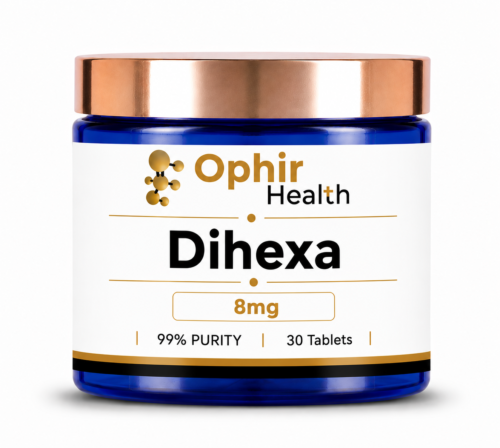
- Dihexa Tablets are a neuroactive peptide designed to enhance cognitive function by promoting the formation of new synaptic connections and supporting neuroplasticity in the brain.
- This compound has demonstrated the ability to improve memory, learning, and overall mental performance by mimicking brain-derived neurotrophic factor (BDNF) activity and activating key neural pathways.
- Dihexa supports long-term brain health by stimulating synaptogenesis and neuroregeneration, making it an ideal candidate for research in cognitive decline and age-related neurological conditions.
- In addition to its cognitive-enhancing effects, Dihexa has shown potential benefits for mood and focus, helping promote sharper mental clarity and emotional stability during high-demand cognitive tasks.
- Formulated for researchers exploring advanced nootropic agents, Dihexa Tablets provide a powerful tool for investigating cognitive repair and brain optimization applications.
-
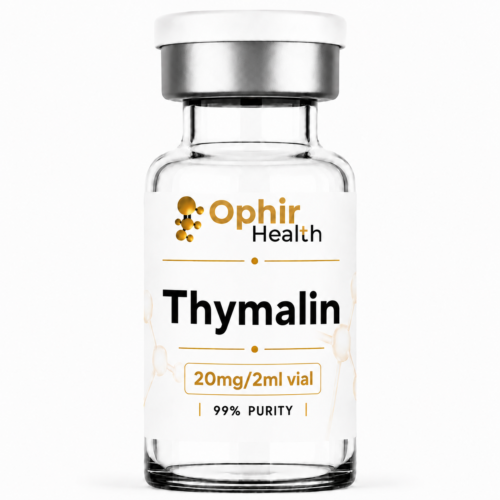
Thymalin is a synthetic research peptide modeled after naturally occurring peptides associated with the thymus gland, an organ that plays an important role in immune-cell development and regulation. Thymalin has been studied for its relationship with thymic function, immune signaling, and cellular processes associated with immune regulation.
Research involving Thymalin has explored its relationship with T-cell activity, immune response, cellular signaling, and age-related changes in immune function. Researchers have also investigated thymic peptides in connection with oxidative stress, cellular regulation, and biological processes associated with aging.
Ophir Health Thymalin 20mg 2ml Vial provides a precisely measured format for laboratory research involving thymic function, immune signaling, T-cell activity, cellular regulation, and age-related biological processes.
-
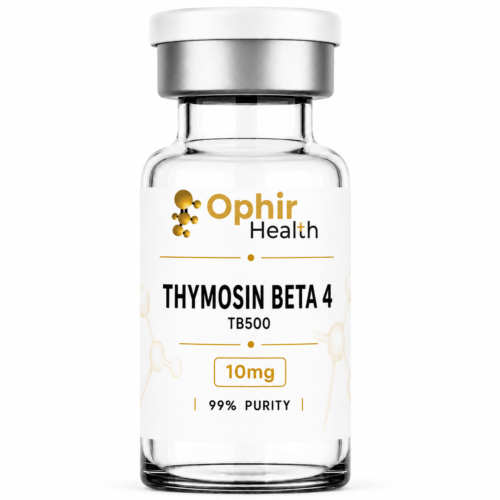
Thymosin Beta-4 is a naturally occurring peptide found in many tissues throughout the body and studied for its involvement in cellular signaling, tissue response, and actin regulation, a process important to cell structure and movement. Synthetic Thymosin Beta-4 is used in research to better understand these biological pathways.
Research involving Thymosin Beta-4 has explored its relationship with cell migration, angiogenesis, inflammatory signaling, tissue remodeling, and cellular repair processes. Researchers have also investigated its activity in laboratory models involving muscle, connective tissue, cardiovascular tissue, and wound-response pathways.
Ophir Health Thymosin Beta-4 provides a precisely measured format for laboratory research involving cellular signaling, tissue-response pathways, actin regulation, angiogenesis, and regenerative biology research.
-
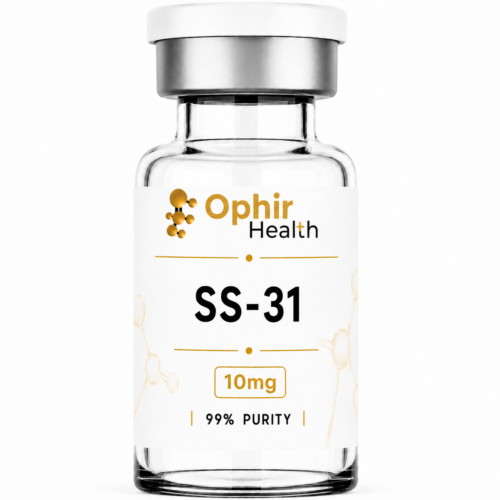
SS-31 is a synthetic research peptide studied for its interaction with mitochondria, the cellular structures responsible for producing much of the energy cells need to function. SS-31 has been investigated for its ability to interact with cardiolipin, a phospholipid found within the inner mitochondrial membrane that plays an important role in mitochondrial structure and energy production.
Research involving SS-31 has explored its relationship with mitochondrial function, cellular energy production, oxidative stress, and cellular signaling. Researchers have also investigated SS-31 in laboratory models involving mitochondrial dysfunction, tissue response, and age-related changes in cellular energy processes.
Ophir Health SS-31 10mg provides a precisely measured format for laboratory research involving mitochondrial function, cellular energy metabolism, oxidative stress pathways, and mitochondrial biology.
-
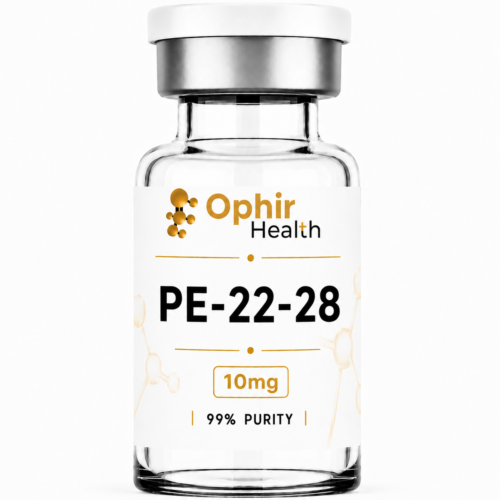
PE-22-28 is a synthetic research peptide derived from spadin, a naturally occurring peptide associated with neurological signaling. It has gained scientific interest for its interaction with TREK-1, a potassium channel found in the nervous system that helps regulate electrical activity and communication between nerve cells.
Research involving PE-22-28 has explored its relationship with TREK-1 activity, neuroplasticity, neurogenesis, and synaptic function. Preclinical researchers have examined how these pathways relate to mood-related behavior, the formation of new neurons, and communication between brain cells.
Ophir Health PE-22-28 provides a precisely measured format for laboratory research involving TREK-1 signaling, neuronal activity, neuroplasticity, and neuroscience research.
-
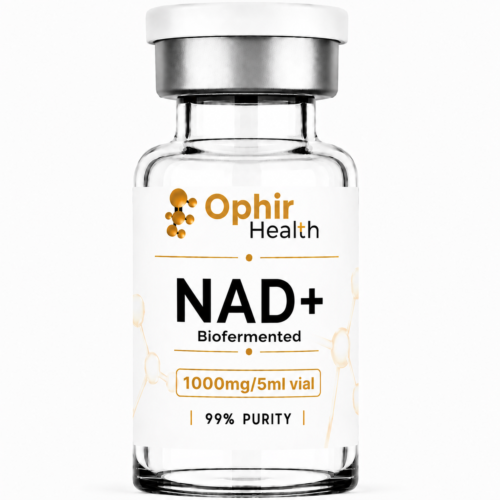
NAD+ (Nicotinamide Adenine Dinucleotide) is a naturally occurring coenzyme found in cells throughout the body and plays an important role in converting nutrients into cellular energy. Biofermented NAD+ is produced through fermentation-based processes and is studied as part of research into cellular metabolism and energy production.
Research has explored NAD+ in connection with mitochondrial function, cellular energy, DNA-related processes, oxidative stress, and metabolic activity. Scientists are particularly interested in how NAD+ levels and NAD+-dependent enzymes change with age and how these changes relate to cellular function.
Ophir Health NAD+ Biofermented provides a precisely measured format for laboratory research involving cellular energy metabolism, mitochondrial biology, NAD+-dependent pathways, and aging-related cellular research.
-
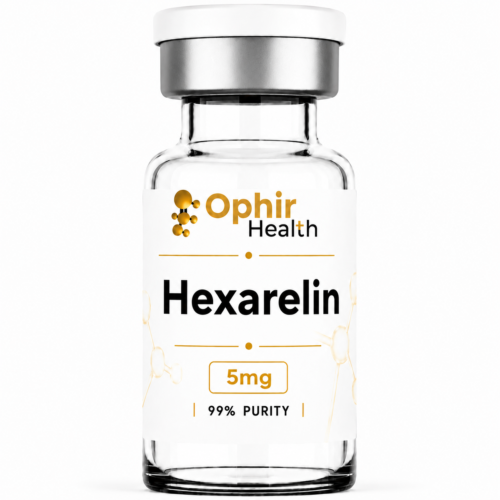
Hexarelin is a synthetic research peptide belonging to the growth hormone-releasing peptide (GHRP) family. It interacts with the growth hormone secretagogue receptor (GHS-R), the same receptor associated with ghrelin, a naturally occurring hormone involved in growth hormone and metabolic signaling.
Research has explored its relationship with growth hormone release, pituitary signaling, metabolic activity, and cardiovascular pathways. Scientists have also investigated how it interacts with receptors found outside the pituitary, including those present in cardiac and vascular tissues.
Ophir Health Hexarelin provides a precisely measured format for laboratory research involving GHS-R activity, growth hormone signaling, endocrine pathways, and metabolic research.
-
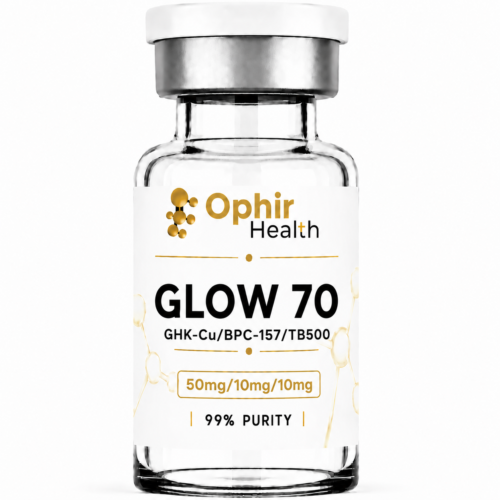
GLOW 70 is a research peptide blend combining GHK-Cu (50mg), BPC-157 (10mg), and TB-500 (10mg). Each peptide has been studied for different biological processes involving cellular signaling, connective tissue, and the way tissues respond to stress and damage.
Research involving these peptides has explored collagen and fibroblast activity, tissue remodeling, cellular repair pathways, angiogenesis, and inflammatory signaling. GHK-Cu is widely studied in skin and connective-tissue biology, while BPC-157 and TB-500 have been investigated in experimental models involving tissue response, cell migration, blood-vessel formation, and regenerative processes.
Ophir Health GLOW 70 provides a combined 70mg research format for laboratory studies involving skin and connective-tissue biology, collagen pathways, cellular signaling, tissue remodeling, and regenerative research.


QUICK LINKS
RESOURCES
Subscribe to our newsletter
Stay Informed
Receive updates on new research compounds, product availability, company news, and educational resources.

© 2026 OPHIR HEALTH. All rights reserved. Ophir Health is an independently operated research supply brand. All branding, logos, and materials are the property of Ophir Health.