
-
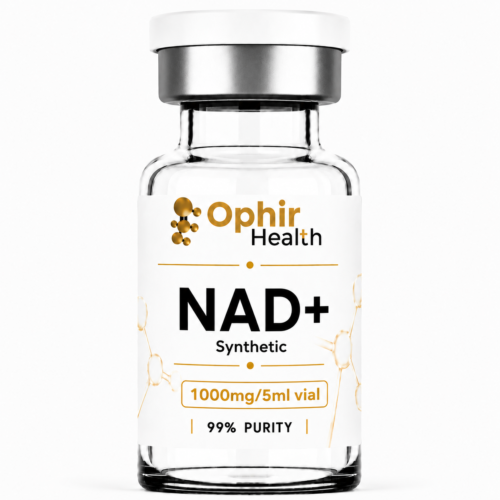 NAD+ (Nicotinamide Adenine Dinucleotide) is a naturally occurring molecule essential for cellular health. It functions as a coenzyme in redox reactions, transferring electrons to support key metabolic processes. NAD+ also acts as a substrate for enzymes such as sirtuins and PARPs, which play vital roles in DNA repair, cellular signaling, and maintaining overall cell function. Why is NAD+ Important? Energy Production: NAD+ is crucial for producing ATP—the primary energy source for cells—through the process of cellular respiration. DNA Repair: It serves as a key substrate for PARP enzymes, which are responsible for detecting and repairing damaged DNA. Cellular Signaling: NAD+ plays a role in important signaling pathways, including those regulating calcium movement and protein modification. Healthy Aging: NAD+ levels naturally decline with age. Restoring or boosting NAD+ has been linked to potential benefits in slowing age-related decline and supporting longevity.
-
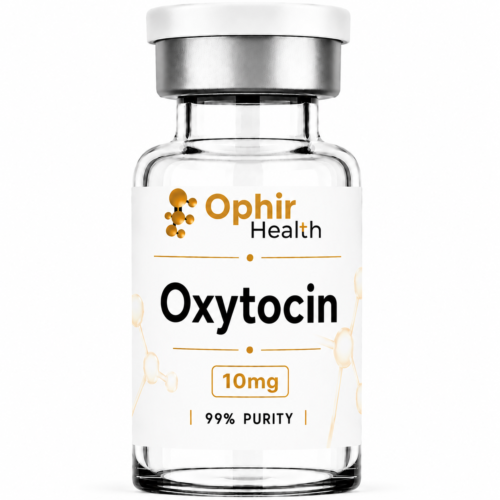
Oxytocin is a naturally occurring peptide hormone produced in the brain and involved in communication between the brain and other parts of the body. Synthetic oxytocin has been widely studied for its interaction with oxytocin receptors, which are involved in a variety of neurological, behavioral, and reproductive processes.
Research has explored its relationship with social behavior, emotional processing, stress responses, bonding, and neurological signaling. Scientists have also examined oxytocin receptor activity in reproductive biology and the complex pathways connecting hormonal signaling with brain function and behavior.
Ophir Health Oxytocin 10mg provides a precisely measured format for laboratory research involving oxytocin receptor activity, neuroendocrine signaling, behavioral pathways, and reproductive biology.
-

PE-22-28 is a synthetic research peptide derived from spadin, a naturally occurring peptide associated with neurological signaling. It has gained scientific interest for its interaction with TREK-1, a potassium channel found in the nervous system that helps regulate electrical activity and communication between nerve cells.
Research involving PE-22-28 has explored its relationship with TREK-1 activity, neuroplasticity, neurogenesis, and synaptic function. Preclinical researchers have examined how these pathways relate to mood-related behavior, the formation of new neurons, and communication between brain cells.
Ophir Health PE-22-28 provides a precisely measured format for laboratory research involving TREK-1 signaling, neuronal activity, neuroplasticity, and neuroscience research.
-

PEG-MGF is a modified form of Mechano Growth Factor (MGF), a peptide associated with the IGF-1 family and studied for its role in the way muscle tissue responds to mechanical stress. The addition of polyethylene glycol, known as PEGylation, is designed to increase the peptide’s stability and extend its presence in experimental settings.
Research has explored MGF-related pathways in connection with muscle-cell activity, tissue remodeling, cellular growth, and responses to mechanical stress. Scientists have also examined its relationship with muscle progenitor and satellite cells, which are involved in the biological processes surrounding skeletal-muscle maintenance and repair. (PubMed)
Ophir Health PEG-MGF provides a precisely measured format for laboratory research involving IGF-1-related pathways, muscle-cell signaling, tissue response, and skeletal-muscle biology.
-
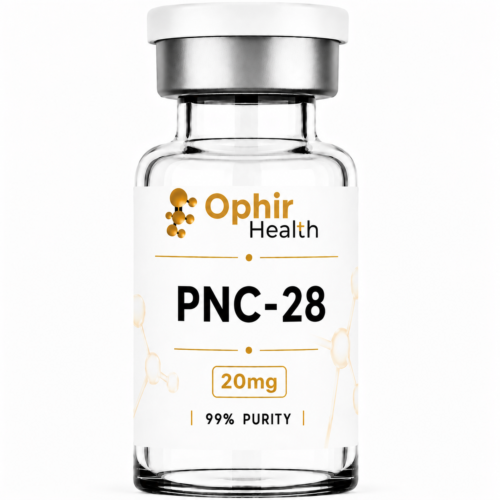
PNC-28 is a synthetic research peptide derived from a region of p53, a protein involved in regulating cell growth and the way cells respond to damage. The peptide has gained scientific interest for its potential interactions with cellular membranes and proteins associated with abnormal cell growth.
Laboratory research has explored its interaction with HDM-2, a protein found at elevated levels in certain cancer cells. Studies have examined how this interaction may influence cell-membrane activity and cellular responses, making it an area of interest in cancer-cell biology and experimental oncology research.
Ophir Health PNC-28 provides a precisely measured format for laboratory research involving p53 pathways, HDM-2 interactions, cell-membrane activity, and cellular biology.
-
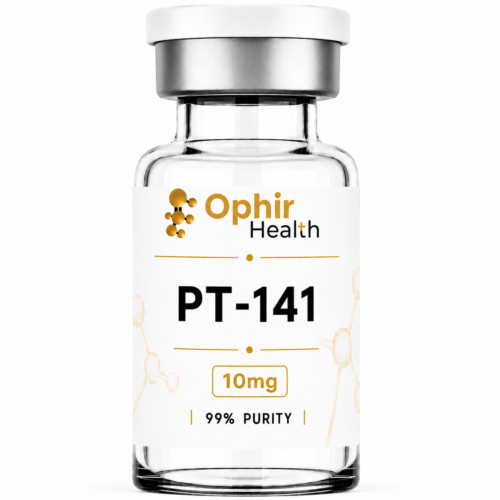
PT-141, also known as bremelanotide, is a synthetic research peptide that interacts with melanocortin receptors, a group of receptors involved in signaling throughout the brain and nervous system. Unlike compounds that act directly on blood flow, PT-141 research has focused largely on neurological pathways associated with sexual behavior and response.
Studies involving PT-141 have explored its relationship with melanocortin receptor activity, central nervous system signaling, sexual-response pathways, and behavioral signaling. Researchers have focused particularly on MC4 receptors found in areas of the brain involved in neurological and physiological responses.
Ophir Health PT-141 provides a precisely measured format for laboratory research involving melanocortin signaling, neurological pathways, receptor activity, and sexual-response research.
-

Semax is a synthetic research peptide derived from a fragment of adrenocorticotropic hormone (ACTH). It has gained scientific interest for its activity within the brain and nervous system, particularly in research involving cognitive function, memory, learning, and the way brain cells respond to stress.
Studies involving Semax have explored its relationship with neurotransmitters and brain-derived neurotrophic factor (BDNF), a protein involved in the growth, communication, and maintenance of nerve cells. Researchers have also examined Semax in connection with attention, neurological function, and the biological processes that support healthy brain-cell activity.
Ophir Health Semax 30mg provides a precisely measured format for laboratory research involving cognitive function, BDNF activity, neurotransmitter function, and neurological research.
-

Sermorelin is a synthetic research peptide modeled after a portion of growth hormone-releasing hormone (GHRH), the natural hormone that signals the pituitary gland to release growth hormone. This makes it useful for studying how the body’s own growth hormone signaling system is regulated.
Research has explored Sermorelin in connection with pituitary activity, growth hormone release, IGF-1 signaling, and endocrine function. Scientists use these pathways to investigate the relationship between hormonal signaling, metabolism, growth, and other biological processes.
Ophir Health Sermorelin provides a precisely measured format for laboratory research involving GHRH activity, pituitary signaling, growth hormone pathways, and endocrine biology.
-
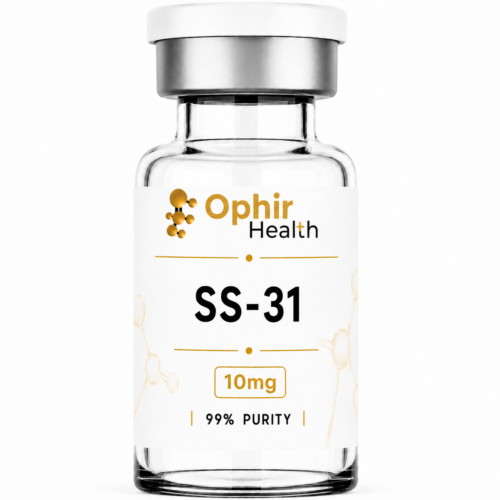
SS-31 is a synthetic research peptide studied for its interaction with mitochondria, the cellular structures responsible for producing much of the energy cells need to function. SS-31 has been investigated for its ability to interact with cardiolipin, a phospholipid found within the inner mitochondrial membrane that plays an important role in mitochondrial structure and energy production.
Research involving SS-31 has explored its relationship with mitochondrial function, cellular energy production, oxidative stress, and cellular signaling. Researchers have also investigated SS-31 in laboratory models involving mitochondrial dysfunction, tissue response, and age-related changes in cellular energy processes.
Ophir Health SS-31 10mg provides a precisely measured format for laboratory research involving mitochondrial function, cellular energy metabolism, oxidative stress pathways, and mitochondrial biology.
-
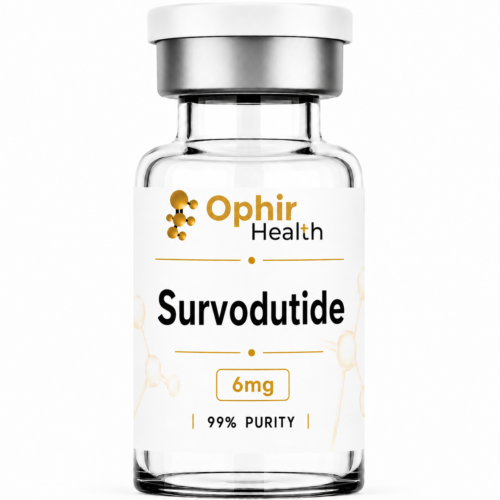
Survodutide is a synthetic research peptide designed as a dual glucagon and GLP-1 receptor agonist, meaning it has been studied for its interaction with two hormone-signaling pathways involved in metabolic regulation, appetite, and energy balance.
Research involving Survodutide has explored its relationship with glucose and lipid metabolism, appetite signaling, energy expenditure, body weight, and body composition. Researchers have also investigated its effects on liver-related metabolic processes, including pathways associated with hepatic fat accumulation and metabolic function.
Ophir Health Survodutide 6mg provides a precisely measured format for laboratory research involving glucagon and GLP-1 receptor signaling, metabolic regulation, energy balance, lipid metabolism, and body-weight research.
-

Tesamorelin is a synthetic research peptide modeled after growth hormone-releasing hormone (GHRH), a naturally occurring hormone that signals the pituitary gland to release growth hormone. Tesamorelin has been studied for its interaction with growth hormone pathways and their relationship with metabolic function and body composition.
Research involving Tesamorelin has explored its relationship with growth hormone signaling, IGF-1 activity, lipid metabolism, visceral adipose tissue, and body composition. Researchers have also examined its role in metabolic processes and biological pathways associated with fat distribution and energy regulation.
Ophir Health Tesamorelin 10mg provides a precisely measured format for laboratory research involving GHRH pathways, growth hormone signaling, metabolic regulation, lipid metabolism, and body-composition research.

QUICK LINKS
RESOURCES
Subscribe to our newsletter
Stay Informed
Receive updates on new research compounds, product availability, company news, and educational resources.

© 2026 OPHIR HEALTH. All rights reserved. Ophir Health is an independently operated research supply brand. All branding, logos, and materials are the property of Ophir Health.